
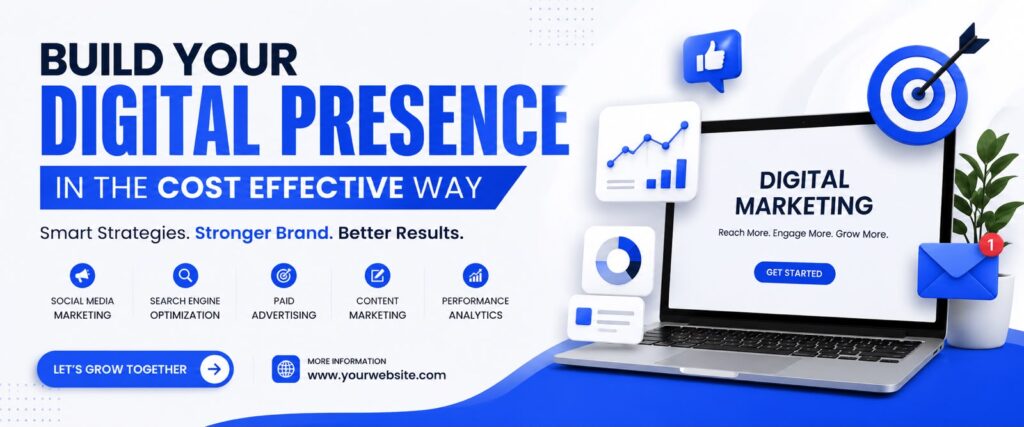
Here’s an SEO-friendly blog article on the topic “Build Your Digital Presence in the Most Cost-Effective Way.”
Build Your Digital Presence in the Most Cost-Effective Way
Introduction
In today’s digital world, having a strong online presence is no longer optional—it’s essential. Whether you’re a startup, a small business, or a freelancer, your customers are searching for products and services online before making purchasing decisions. The good news is that building a professional digital presence doesn’t require a massive budget. With the right strategy, you can establish your brand, reach your target audience, and grow your business in a cost-effective way.
What Is Digital Presence?
Your digital presence is the collection of all the places where your business exists online. It includes:
- Your website
- Social media profiles
- Search engine visibility
- Business listings
- Online reviews
- Email marketing
- Digital advertisements
- Content such as blogs, videos, and infographics
A well-managed digital presence increases credibility, builds trust, and attracts more customers.
Why Every Business Needs a Strong Digital Presence
Consumers expect businesses to have an online presence. Without one, you may lose potential customers to competitors who are easier to find online.
A strong digital presence helps you:
- Increase brand awareness
- Reach a larger audience
- Build customer trust
- Generate qualified leads
- Improve customer engagement
- Increase sales and revenue
- Stay competitive in your industry
Cost-Effective Ways to Build Your Digital Presence
1. Create a Professional Website
Your website is the foundation of your online identity. It should be fast, mobile-friendly, and easy to navigate.
Include:
- Clear business information
- Service or product pages
- Contact details
- Customer testimonials
- Blog section
- Call-to-action buttons
A simple, well-designed website can generate leads 24/7 without ongoing sales efforts.
2. Invest in Search Engine Optimization (SEO)
SEO helps your website rank higher on search engines, allowing potential customers to find your business organically.
Focus on:
- Keyword research
- Quality content
- Fast website speed
- Mobile optimization
- Local SEO
- Internal linking
- Regular blog publishing
Unlike paid advertising, SEO provides long-term results with continuous traffic.
3. Be Active on Social Media
Choose platforms where your audience spends their time.
Popular platforms include:
- X (formerly Twitter)
- YouTube
Share:
- Educational content
- Product updates
- Customer success stories
- Behind-the-scenes posts
- Industry tips
Consistency matters more than posting every day.
4. Start a Business Blog
Blogging is one of the most affordable ways to improve SEO and establish authority.
Write about:
- Customer problems
- Industry trends
- Product guides
- FAQs
- Case studies
- Expert insights
High-quality blog content continues attracting visitors long after publication.
5. Use Google Business Profile
If you serve local customers, creating a Google Business Profile is one of the best free marketing tools available.
Benefits include:
- Appearing in local searches
- Showing business hours
- Displaying customer reviews
- Increasing local credibility
- Driving phone calls and directions
6. Leverage Email Marketing
Email remains one of the highest-return digital marketing channels.
Use email to:
- Share company updates
- Promote offers
- Send newsletters
- Educate customers
- Build long-term relationships
Growing your email list is inexpensive and highly effective.
7. Create Valuable Content
Content marketing builds trust before customers make purchasing decisions.
Examples include:
- Blogs
- Videos
- Infographics
- E-books
- Checklists
- Tutorials
- Webinars
Helpful content positions your business as an industry expert.
8. Encourage Customer Reviews
Positive reviews increase credibility and influence purchasing decisions.
Ask satisfied customers to leave reviews on:
- Industry-specific platforms
Respond professionally to both positive and negative feedback.
9. Use Free and Affordable Digital Tools
Many excellent tools offer free plans or affordable pricing for small businesses.
These can help with:
- Graphic design
- Social media scheduling
- Email marketing
- Website analytics
- SEO monitoring
- Project management
Choosing the right tools helps maximize your marketing budget.
10. Track and Improve Your Performance
Monitor your digital marketing efforts regularly.
Measure:
- Website traffic
- Conversion rates
- Search rankings
- Social media engagement
- Email open rates
- Lead generation
Analyzing data helps you invest in strategies that deliver the best return.
Common Mistakes to Avoid
Many businesses waste money by:
- Ignoring SEO
- Having an outdated website
- Posting inconsistently on social media
- Not tracking marketing performance
- Publishing low-quality content
- Failing to optimize for mobile users
- Neglecting customer engagement
Avoiding these mistakes helps you achieve better results without increasing your budget.
Benefits of a Cost-Effective Digital Presence Strategy
When implemented correctly, a budget-friendly digital marketing strategy can provide:
- Higher online visibility
- Increased customer trust
- Better search rankings
- More website traffic
- Higher-quality leads
- Improved customer retention
- Sustainable business growth
Small, consistent improvements often produce better long-term results than expensive short-term campaigns.
Conclusion
Building a strong digital presence doesn’t require a huge marketing budget. By focusing on a professional website, SEO, valuable content, social media engagement, local optimization, and email marketing, businesses of all sizes can establish a credible online brand while keeping costs under control.
The key is consistency. Start with the essentials, create valuable content for your audience, measure your results, and continually refine your strategy. Over time, these cost-effective efforts can lead to increased visibility, stronger customer relationships, and sustainable business growth.
If you’d like, I can also optimize this blog with SEO keywords, meta title, meta description, FAQ schema, and a call-to-action to improve its search engine performance.